Last updated: 23 June 2026.
Francesinha is the Porto food people argue about most. Not because it is delicate, but because everyone has a sauce opinion. Some want it spicy and beer-heavy. Some want it sweeter, thicker, or darker. Some care more about the meat inside than the sauce. Some judge the whole plate by the fries.
I would treat the places below as solid starting points, not as a sacred ranking. Restaurants change staff, sauce, opening hours and booking rules, and francesinha is one of those foods where people argue forever. Check the current menu, recent photos and opening hours before going.
Where I Would Start
- Good first francesinha: Café Santiago or Lado B, because both are central and easy for visitors.
- Best group-friendly choice: Brasão, especially if some people want a more polished restaurant rather than a snack-bar feel.
- More old-school pick: Bufete Fase, often mentioned for a compact, focused francesinha experience.
- Good Boavista/Foz-side option: Cufra, useful if you are staying away from Baixa.
- Good Matosinhos-side option: Requinte, especially if you are already west of the centre.
- Not a francesinha, but worth knowing: Gazela for cachorrinhos, Porto’s spicy little hot dogs.
- Booking difficulty: low at simple places, higher at Brasão or popular central spots at weekend dinner.
- Tourist-trap risk: medium in Baixa and Ribeira if the menu is huge, translated badly, and selling every “typical” dish at once.
What is a francesinha?
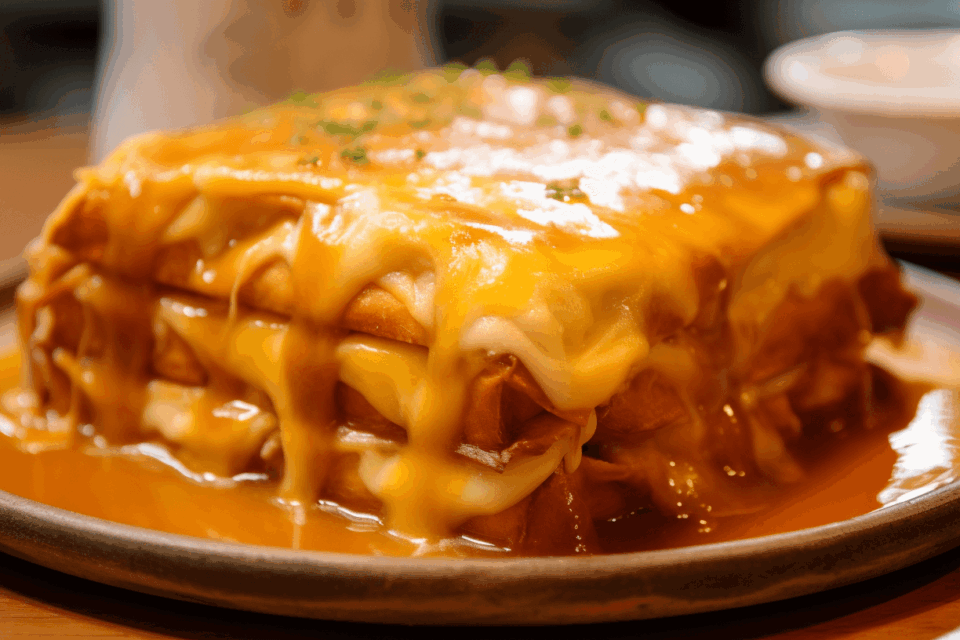
A Porto francesinha is a hot sandwich layered with meats, covered with melted cheese, surrounded by sauce, and usually served with fries. The classic version often includes steak or roast meat, ham, fresh sausage, linguiça, and cheese. The sauce is the real identity of the house: usually tomato, beer, stock, spice, and whatever the kitchen refuses to tell you.
It is often compared to a croque-monsieur, but that comparison only gets you halfway. A francesinha is heavier, saucier, saltier, and built for beer rather than wine. It is not a light lunch between museums unless you are ready to slow down afterwards.
Common options:
- Francesinha especial: often includes egg and fries, though the exact meaning depends on the restaurant.
- Com ovo: with a fried egg on top.
- Sem ovo: without the egg.
- Molho à parte: sauce on the side, useful if you want control over the amount.
- Picante: spicy. In Porto this can still be mild if you are used to very hot food, but ask before assuming.
How to choose a francesinha place
Do not chase only the “best” label. The best francesinha for a first-time visitor may not be the same as the best one for someone who lives nearby and wants their regular spot. Choose by situation.
- First visit and central location: pick Café Santiago, Lado B, or Brasão.
- Short wait and simple format: look at Bufete Fase or a neighbourhood snack-bar.
- Group dinner: Brasão is easier than tiny cult places.
- Staying in Boavista: Cufra is more convenient than crossing town for a sandwich.
- Already going to Matosinhos: Requinte can fit that side of the city.
- Not very hungry: split one or order something else. A full francesinha is not polite to a small appetite.
Café Santiago
Best for: first-timers who want a famous, central francesinha without overthinking the choice.
Café Santiago is one of the best-known francesinha names in Porto. It is central, busy, and easy to fit into a Baixa itinerary. That also means it can feel touristy at peak times, but touristy does not automatically mean bad. For many visitors, this is the easiest introduction to the dish because the location and reputation remove decision fatigue.
Go outside peak lunch or dinner if you hate queues. If you are already near Coliseu do Porto, Batalha, or Rua de Santa Catarina, it is a practical stop. Expect a full, heavy plate. This is not the meal to schedule right before climbing lots of hills.
Useful links: official Café Santiago site and Café Santiago on Google Maps.
Lado B
Best for: a central francesinha with an easy visitor setup and less guesswork.
Lado B is another central option often chosen by visitors. It is close to the same Baixa/Batalha orbit as Café Santiago, so it works well if you are sightseeing around Aliados, São Bento, Santa Catarina, or Batalha. The style is accessible and the restaurant format is easy if you do not speak Portuguese.
This is a good pick when you want the classic Porto experience but do not want to hunt around residential neighbourhoods. It is also useful when travelling with someone who wants a straightforward restaurant rather than a tiny counter.
Useful links: official Lado B site and Lado B on Google Maps.
Brasão
Best for: groups, visitors who want a polished restaurant, and people who care about comfort as much as the sandwich.
Brasão is one of the safest choices when you are with a mixed group. Some people may want francesinha, others may want steak, beer, starters, or something less intense. The setting is more designed than a traditional snack-bar, and that helps if you are planning dinner rather than a quick solo lunch.
The tradeoff is that Brasão can feel more “restaurant brand” than old Porto counter. That is not a problem if what you need is reliable service, booking, and a menu that works for several people. Book ahead at weekends, especially for dinner.
Useful links: official Brasão site and the Porto booking advice.
Bufete Fase
Best for: people who want a small, focused, old-school francesinha stop.
Bufete Fase is regularly discussed by francesinha fans because it is more focused and less polished than the big central restaurant names. This is the sort of place where the appeal is not a long menu or a pretty room. The appeal is that people go for the plate.
Because small places can change hours, close for holidays, or be full quickly, check recent opening information before crossing town. It is better as a deliberate lunch stop than a backup plan for a large group.
Useful link: Bufete Fase on Google Maps.
Cufra
Best for: Boavista, Casa da Música, families, and visitors staying outside the historic centre.
Cufra is useful because not every Porto meal should require going back to Baixa. If you are staying near Boavista, Casa da Música, Avenida da Boavista, or Foz, Cufra can be a more practical option than fighting central queues. It also works better for families and larger tables than some smaller classic spots.
Think of it as a convenient neighbourhood-style choice rather than a pilgrimage. If your Porto plans are already west of the centre, it can save time and energy.
Useful links: official Cufra site and Porto public transport.
Yuko Tavern
Best for: people who want a well-known local recommendation outside the most obvious tourist loop.
Yuko Tavern is often recommended in Porto food discussions, especially by people who like a more sit-down, tavern-style setting. It is not as instantly convenient as the Baixa names for a first-time sightseeing route, but it can make sense if you are exploring beyond the centre or want to avoid the most obvious visitor circuit.
Because independent restaurant websites and social pages can change, use the map listing for current hours and contact details before going. If you are planning a weekend meal, call or reserve if possible.
Useful link: Yuko Tavern on Google Maps.
Requinte in Matosinhos
Best for: Matosinhos, beach days, and visitors already west of Porto.
Requinte is a useful name to know if you are in Matosinhos rather than central Porto. Most visitors think of Matosinhos for fish, seafood, and beach access, but it also works for Porto-area comfort food. If you are spending the afternoon around Matosinhos beach or travelling back on the metro, a francesinha here can fit the route better than going into Baixa.
Do not combine a heavy francesinha with a serious seafood lunch unless you have a very large appetite. For most people, Matosinhos is either a fish meal day or a francesinha day, not both.
Useful link: Requinte on Google Maps.
Gazela: not francesinha, but worth the detour
Best for: a lighter Porto snack, late lunch, or people who want something spicy without committing to a full francesinha.
Gazela is famous for cachorrinhos: small toasted hot dogs with sausage, cheese, and spicy sauce, cut into bite-sized pieces. This is not a francesinha. I mention it because visitors looking for Porto comfort food often have the same question: should I get the huge saucy sandwich, or something smaller and more snackable?
If you are curious but not hungry enough for a francesinha, Gazela can be the better call. It is also easier to pair with a beer and continue your day afterwards.
Useful links: official Gazela site and Gazela on Google Maps.
How much does a francesinha cost?
Prices vary by restaurant, location, and whether fries, egg, or drink are included. In central Porto, expect a francesinha to cost more in polished restaurants than in older snack-bar style places. A full meal with drink can easily become a mid-priced lunch rather than a cheap snack.
Check whether fries are included. Some menus include them automatically, some price them separately, and some offer different versions. If the menu has “especial,” read what makes it special before ordering.
What to drink with francesinha
Beer is the standard match. A fino, Porto’s common small draft beer, works because the sandwich is salty, rich, and spicy. Wine can work, but francesinha is not the most wine-friendly Porto dish. If you want wine culture, save that for a different meal in Gaia or the Douro.
Water is also a perfectly sensible choice. Francesinha sauce can be salty, and the meal is heavy enough without forcing another ritual around it.
Common mistakes
- Eating it too late at night: possible, but not wise if you want to sleep well.
- Ordering one each in a not-very-hungry group: split first if you are unsure.
- Assuming all sauces are similar: the sauce is where houses differ most.
- Only eating in Ribeira: good views do not guarantee good francesinha.
- Ignoring location: the best choice is often the one that fits your day’s route.
- Forgetting booking: simple lunch spots may be walk-in; popular restaurants at weekend dinner may not be.
Vegetarian and lighter versions
Vegetarian francesinhas exist in Porto, but they are not the default. If you do not eat meat, check menus carefully rather than assuming every famous francesinha place has a good vegetarian version. Ask whether the sauce is vegetarian too, because the sandwich can be meat-free while the sauce or stock is not.
If you simply want something lighter, do not force a francesinha. Porto has plenty of better light meals: soup, grilled fish, bifanas, petiscos, salads, or a market lunch at Bolhão. Portuguese soups in Porto is a better place to start on a rainy day when you want comfort without the food coma.
Best area to eat francesinha
Baixa/Batalha: easiest for first-time visitors. Café Santiago, Lado B, and Gazela all fit this general zone.
Aliados/Santa Catarina: practical if you are shopping or sightseeing, but compare recent reviews and avoid places where the menu looks like it was made for passing tourist traffic only.
Boavista: useful if you are staying near Casa da Música or western Porto. Cufra is the practical name here.
Matosinhos: better known for fish, but Requinte gives you a Porto-area francesinha option if your day is already near the beach.
My Take
For a first francesinha in Porto, choose convenience and reliability over mythology. Café Santiago and Lado B are easy central picks. Brasão is better for a comfortable group meal. Bufete Fase is more focused and old-school. Cufra and Requinte make sense if you are outside Baixa. Gazela is not a francesinha place in the strict sense, but it is one of the best alternatives if you want a spicy Porto snack rather than a full plate.
Above all, do not make francesinha your only idea of Porto food. It is worth trying, but it is heavy, specific, and not something most people want every day. For broader planning, use best restaurants in Porto, and save this meal for a day when you can walk it off slowly afterwards.