You can get through a Porto weekend in English. Still, a greeting in Portuguese makes a café counter feel less like a transaction. Keep it short, say it before the order, and don’t worry if the reply comes too fast to catch.
The first ten seconds
- Bom dia — good morning; the safest greeting before lunch.
- Boa tarde — good afternoon.
- Boa noite — good evening, and also good night.
- Se faz favor — please, especially natural when asking for something.
- Obrigado / obrigada — thank you. Use obrigado if you are a man and obrigada if you are a woman.
- Desculpe — excuse me or sorry.
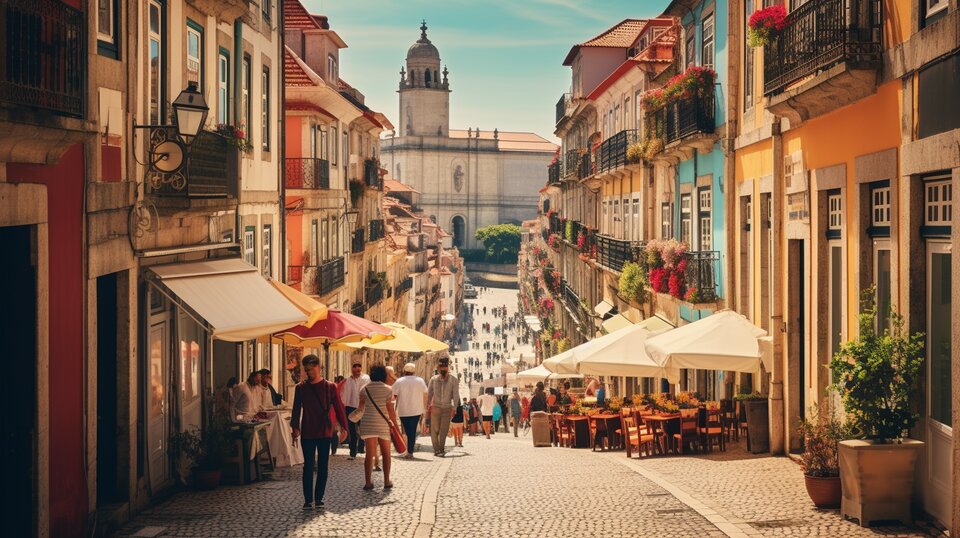
At a counter, try “Bom dia. Um café e um pastel de nata, se faz favor.” That’s an espresso and a custard tart, please. Confeitaria do Bolhão is a good place to practise; point if the pastry names are defeating you.
Ordering coffee and lunch
- Um café — an espresso, usually the small coffee you’ll get by default.
- Uma meia de leite — coffee with milk, served in a cup.
- Um galão — a taller, milkier coffee, usually in a glass.
- Uma água, por favor — a water, please.
- Tem mesa para dois? — do you have a table for two?
- O que recomenda? — what do you recommend?
- A conta, por favor — the bill, please.
- Posso pagar com cartão? — can I pay by card?
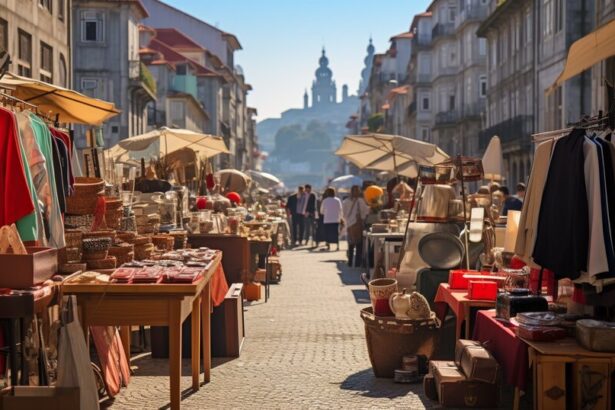
At a busy lunch counter in Mercado do Bolhão, it’s often easier to point at what you want and say the name than to perform a perfect sentence. If you’re seated and want the bill, catch a server’s eye and use “a conta, se faz favor.”
When you haven’t understood
- Pode repetir, por favor? — could you repeat that, please?
- Mais devagar, por favor — more slowly, please.
- Não percebi — I didn’t understand.
- Fala inglês? — do you speak English?
European Portuguese can sound quick and clipped, particularly when you’re expecting Spanish-like vowels. I use “Desculpe, não percebi. Pode repetir mais devagar?” If that still goes nowhere, show the address or destination on your phone. It is a normal way to solve the moment, not a language exam.
Allergies and dietary requests
“Sou alérgico/alérgica a…” means “I’m allergic to…” Use alérgico if you’re a man and alérgica if you’re a woman. For a serious allergy, write the ingredient and the allergy in Portuguese and show it to the staff; don’t rely on a phrase you’re unsure how to pronounce. “Sem carne” means without meat and “sem peixe” means without fish, but neither communicates cross-contamination or a serious allergy.
Getting around
- Onde fica…? — where is…?
- Onde fica a estação? — where is the station?
- Este autocarro vai para…? — does this bus go to…?
- Preciso de um bilhete — I need a ticket.
- Estou à procura de… — I’m looking for…
For a driver, hotel desk or taxi, a pin on the map beats trying to pronounce a street name over traffic. If you’re asking about the airport, say “aeroporto”; for the main long-distance rail station, say “Campanhã.”
Two useful details
In Portugal, the card machine is often called Multibanco, so “Posso pagar com Multibanco?” is understood as asking to pay by card. It is not the same as asking where to find an ATM. And if someone says “obrigado” to you, you can simply smile; you don’t need to return every phrase in Portuguese.
My short list for Porto is: bom dia, se faz favor, obrigado/obrigada, desculpe, um café, a conta, posso pagar com cartão? and pode repetir? Those will get more use than a page of memorised emergency phrases. Try them once at a café, then use them wherever the day takes you.