Last updated: 14 July 2026.
Porto’s historic districts are best understood on foot, but not all in one rush. Ribeira gives you the riverfront postcard. Sé and Vitória give you steep streets, viewpoints and old stone. Miragaia is quieter and better for slowing down. Bonfim shows how the city feels when you move away from the most polished visitor route.
I think of these areas as a walk in layers, not a checklist. Wear shoes with grip, expect hills, and leave time to stop when a street suddenly opens into a view.
How I Would Walk It
- For a first walk, connect Sé, Vitória and Ribeira, then cross to Gaia if your legs are still happy.
- For quieter streets, add Miragaia or climb away from the river earlier.
- For food and everyday Porto, head to Bonfim or Cedofeita after the sightseeing core.
- Do not plan historic Porto like a flat city. Short distances can still be tiring.
- Morning is better for photography and cooler walking; late afternoon is better for atmosphere.
Ribeira
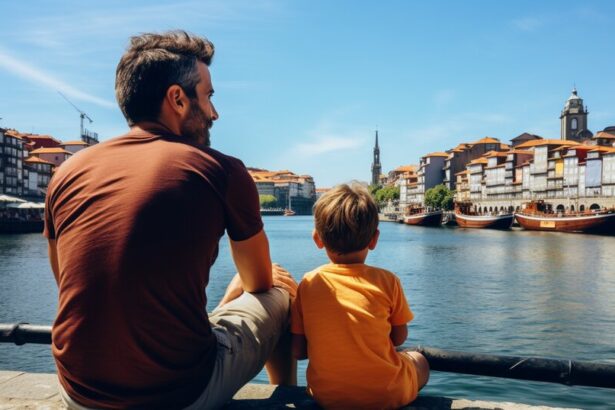
Ribeira is the famous riverfront: colourful facades, terraces, boats, crowds and the view across to Gaia. It is worth seeing, but it is not where I would spend the whole day. Walk it, look up at the stacked houses, then decide whether to cross the bridge or climb back into the older streets.
For eating, be selective. The view is strong, but not every menu deserves it. If you want to sit by the river, choose the table deliberately rather than being pulled into the first available terrace.
Sé and the Cathedral Area
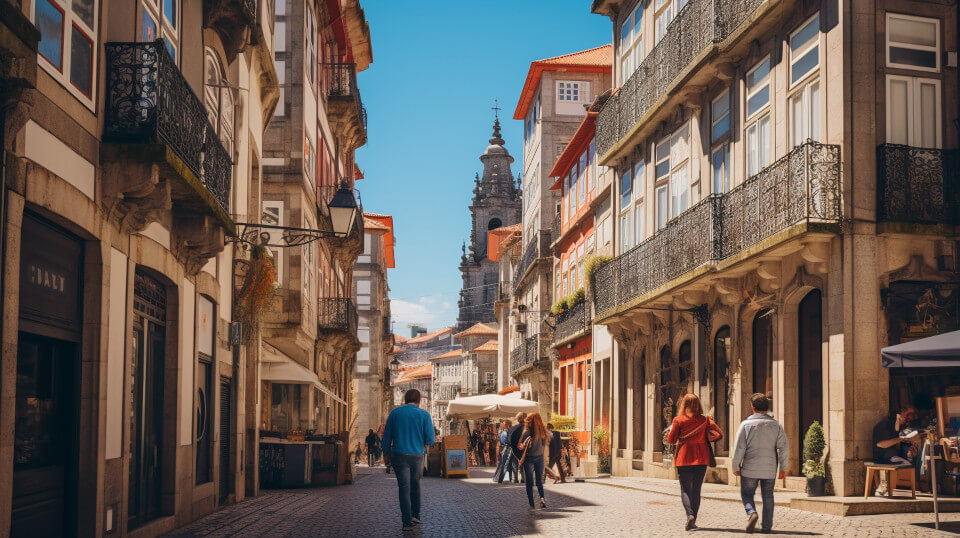
The area around Porto Cathedral is one of the best places to understand the city’s height. Streets drop quickly toward the river, viewpoints appear suddenly, and the stone lanes feel older than the polished shopping streets around Aliados.
Go slowly. This is not a place for rushing with luggage or bad shoes. If you are arriving from São Bento, climb toward Sé first, then descend. Doing the same loop in reverse can feel harder than it looks on the map.
Vitória
Vitória sits between the tourist centre, Clérigos, Cordoaria and the river descent. It is useful because it connects many Porto walks naturally: bookshops, viewpoints, churches, cafés and narrow streets all sit close together.
If you only have one full day, Vitória often becomes the hinge between sightseeing and wandering. It is also a good place to pause before deciding whether to continue downhill to Ribeira or stay higher for a quieter coffee.
Miragaia
Miragaia is quieter and more residential. It runs west from the riverfront and feels less staged than the busiest part of Ribeira. It is a good area when you want Porto texture without constantly dodging tour groups.
Miragaia works well as a slow walk toward the river or as part of a route toward the gardens and the west side of the city. It is not about ticking off monuments; it is about seeing how the city softens once you leave the main visitor lane.
Bonfim
Bonfim is not the postcard old town, but it matters if you want to feel modern Porto changing. You will find cafés, small restaurants, older shops, renovated buildings and streets that still feel lived-in. It pairs well with lunch or coffee rather than a landmark checklist.
For visitors staying more than two days, Bonfim can be a useful correction to the idea that Porto is only Ribeira, Clérigos and Gaia views. For people thinking about moving here, it is one of the areas that shows daily rhythm better than the centre.
A Simple First-Time Route
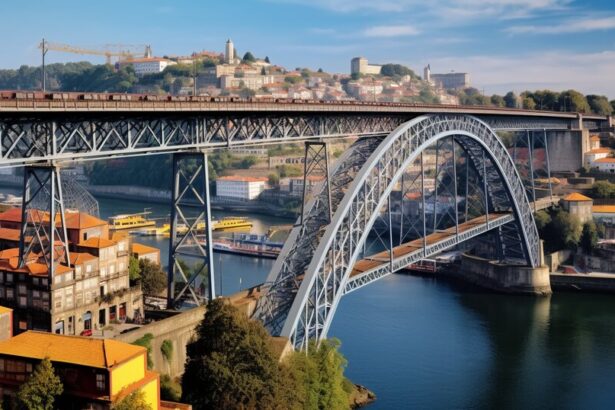
Start near São Bento, climb or walk toward Sé, drop slowly through the old lanes toward Ribeira, cross to Gaia for the view, then return by the upper deck or metro if your legs are done. On another day, add Miragaia, Foz or Bonfim instead of repeating the same riverfront loop.
For a broader first visit plan, see best things to do in Porto. For getting between areas, see Porto public transport.
What I Would Avoid
I would avoid trying to “complete” the historic districts in one forced walk. Porto is compact, but the hills change everything. Pick two or three areas, leave room for coffee or a viewpoint, and let the city breathe a bit.