Last updated: 24 June 2026.
Porto is not a “cheese city” in the way it is a port wine city, but it is a very good place to learn Portuguese cheese. The best approach is to treat cheese as part of a wider food plan: buy it at markets and old grocers, order it with wine, take some home if transport rules allow, and understand which cheeses are local to northern Portugal and which come from other Portuguese regions.
I would start with the main Portuguese cheeses worth knowing, where to look in Porto, what to pair them with, and what to avoid if you want better than a random supermarket wedge.
What I Would Start With
- Best first cheese to know: Queijo Serra da Estrela, a rich sheep’s-milk cheese from central Portugal.
- Best northern angle: look for cheeses from Trás-os-Montes, Minho and the broader north, especially in better grocers and markets.
- Best place to start: Mercado do Bolhão and the old food shops around Rua Formosa.
- Best pairing: cheese with Douro wine, vinho verde, tawny port, marmelada or pumpkin jam.
- Best souvenir idea: vacuum-packed cheese from a proper shop, only if your destination’s customs rules allow it.
- Tourist-trap risk: pre-made cheese boards in view-heavy areas can be expensive and ordinary.
Portuguese Cheeses Worth Knowing
Queijo Serra da Estrela
Serra da Estrela is the famous one: a sheep’s-milk cheese from the Serra da Estrela region, often soft, buttery and spoonable when younger. It is not from Porto, but you will see it in good shops and on cheese boards across the city. It is especially good with bread, quince paste, honey or a small glass of tawny port.
Best for: a first serious Portuguese cheese, wine pairing, colder-weather snacks.
Watch for: price and authenticity. Proper DOP cheese costs more, and very cheap versions may not be the same thing.
Queijo de Azeitão
Azeitão is a small, soft sheep’s-milk cheese from the Setúbal area south of Lisbon. It can be creamy, salty and intense in a way that feels similar to Serra da Estrela but usually in a smaller format. It is easier to share as part of a small board.
Best for: people who like soft, rich cheeses but do not want to buy a large wheel.
Queijo São Jorge
São Jorge comes from the Azores and is usually firmer and sharper. It is useful if you prefer aged, tangier cheese rather than soft sheep’s cheese. It works well in sandwiches, with bread and wine, or as part of a mixed board.
Best for: people who like firm, savoury, slightly sharp cheeses.
Queijo de Nisa, Serpa and Other Alentejo Cheeses
Alentejo cheeses can be excellent, especially if you like sheep’s milk, stronger aromas and traditional textures. They are not Porto-specific, but they are part of the Portuguese cheese picture and often appear in better shops.
Best for: building a mixed Portuguese board rather than only buying the most famous cheese.
Requeijão
Requeijão is closer to fresh curd or ricotta than to a hard cheese. It can be eaten with honey, jam, nuts or desserts. You may see regional versions from Serra da Estrela and other areas.
Best for: a lighter cheese option, breakfast, dessert-style pairings.
Where to Buy Cheese in Porto
Mercado do Bolhão
Mercado do Bolhão is the easiest first stop. It is central, easy by metro, and useful because you can compare cheese with other Portuguese food products: bread, fruit, cured meats, tinned fish, wine and sweets. It is polished and popular with visitors, but still practical.
Open Mercado do Bolhão on Google Maps.
Check Mercado do Bolhão if you want a broader market plan.
Old Grocers Around Bolhão and Rua Formosa
The streets around Bolhão are useful for traditional food shopping. Two good map searches are Pérola do Bolhão and Comer e Chorar por Mais. These old-style food shops are better for browsing Portuguese ingredients than most souvenir shops.
Good for: cheese, cured meats, conservas, biscuits, pantry items and gifts.
Tip: ask whether cheese can be vacuum-packed if you are travelling. Also check your destination’s import rules before buying dairy as a souvenir.
Mercado Bom Sucesso
Mercado Bom Sucesso is useful if you are around Boavista or Casa da Música. It is more of a food hall and market hybrid than a traditional cheese-shopping destination, but it can work for casual tasting, snacks and food browsing.
Open Mercado Bom Sucesso on Google Maps.
Wine Bars and Small Plates Restaurants
If you do not want to buy a full cheese, order a cheese board at a wine bar. This is often the best way to learn what you like before shopping. Look for boards that identify the cheeses rather than serving anonymous cubes with a tourist markup.
For wine context, check port wine tasting and, if you want a wider meal plan, what to eat in Porto.
How to Build a Good Portuguese Cheese Board
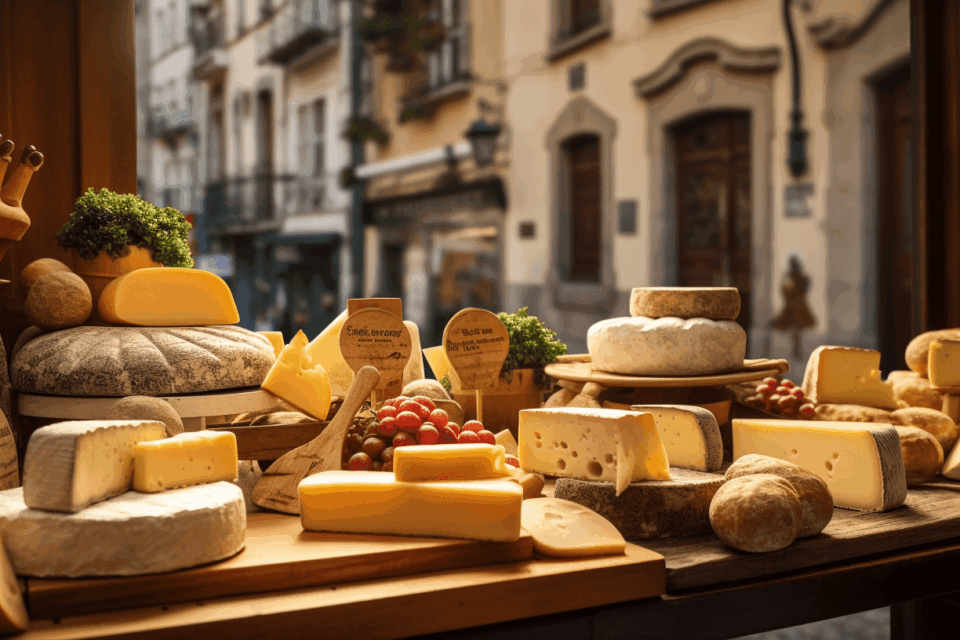
A simple board is better than a crowded one. Choose three cheeses with different textures:
- Soft and rich: Serra da Estrela or Azeitão.
- Firm and sharper: São Jorge.
- Fresh or lighter: requeijão or a mild goat/sheep cheese.
Add good bread, marmelada, pumpkin jam, walnuts or almonds, and maybe a few slices of cured sausage if you eat meat. You do not need a mountain of extras. The point is contrast: salty, sweet, creamy, firm, rich, fresh.
What to Drink With Portuguese Cheese
- Tawny port: good with richer cheeses, nuts and marmelada.
- White port and tonic: better as an aperitif than with every cheese, but useful in warm weather.
- Vinho verde: fresh and sharp, good with lighter cheeses and casual snacks.
- Douro red: better with firmer cheeses, cured meats and a fuller board.
- Espumante: underrated with salty snacks and soft cheeses.
If you are unsure, ask the shop or wine bar for a pairing rather than forcing port with everything. Porto is surrounded by serious wine culture, and cheese is a good excuse to explore it.
Buying Cheese as a Souvenir
Cheese can be a good Porto food souvenir, but only if you are practical. Choose sealed or vacuum-packed products, keep them cool, and check the customs rules for your destination. Travellers within the EU have fewer issues than travellers flying to countries with strict dairy import rules.
For more edible gift ideas, read food souvenirs from Porto.
Common Mistakes
- Buying from a souvenir shop first: start with markets, grocers or wine shops instead.
- Assuming all cheese is from Porto: many of Portugal’s best cheeses come from other regions.
- Only choosing soft cheese: add a firmer cheese such as São Jorge for balance.
- Ignoring transport rules: dairy can be an issue when flying outside Europe.
- Ordering anonymous cheese boards: if the menu does not name the cheeses, the board may not teach you much.
Useful Phrases in a Cheese Shop
You do not need fluent Portuguese to shop well, but a few phrases help:
- “Posso provar?” means “Can I taste?” Use it politely, not as an assumption.
- “É de ovelha, cabra ou vaca?” asks whether it is sheep, goat or cow milk.
- “Pode embalar a vácuo?” asks whether they can vacuum-pack it.
- “Queria um pedaço pequeno.” means you would like a small piece.
- “É muito forte?” asks whether it is very strong.
If the shop is busy, keep questions short and buy something if staff spend time helping you. Old food shops are not tasting counters for tourists; they are working businesses.
Easy Cheese Plans in Porto
One-Hour Baixa Food Shop
Start at Bolhão, look at cheese and conservas, then walk Rua Formosa for old grocers. Buy one cheese, one tin of fish, bread and something sweet. This is better than buying a random airport gift box.
Wine Bar First, Shopping Later
Order a small cheese board at a wine bar and write down the cheeses you liked. Then shop the next day. This is the safest plan if you do not know whether you prefer soft sheep’s cheese, firmer cow’s cheese or sharper aged styles.
Gaia Port and Cheese Pairing
If your day includes Gaia cellars, keep lunch lighter and try cheese later with tawny port or Douro wine. Avoid doing a heavy francesinha, a cellar tasting and a cheese board all in the same afternoon unless you are planning a very slow day.
Price and Quality Notes
Good Portuguese cheese is not always expensive, but the cheapest option is rarely the most interesting one. DOP cheeses, small producers and properly aged wheels cost more for a reason. If you are buying for a picnic, a small piece of good cheese is better than a large block of something bland.
At restaurants, a cheese board should tell you what you are eating. If the menu just says “Portuguese cheese board” and gives no names, ask. In tourist-heavy areas, the board may be perfectly fine, but it may also be generic and overpriced. In a wine bar, staff should usually be able to explain the cheeses and suggest a glass.
My take
For cheese in Porto, start at Bolhão or the old grocers around Rua Formosa, then try a proper cheese board with wine before buying anything expensive. Serra da Estrela is worth knowing, but do not stop there. A good Porto cheese plan is really a Portuguese cheese plan: northern products, Azorean São Jorge, soft sheep’s cheeses, requeijão, good bread and a glass that actually fits what you are eating.
For a broader food route, continue with Porto food markets, port wine tasting and what to eat in Porto.