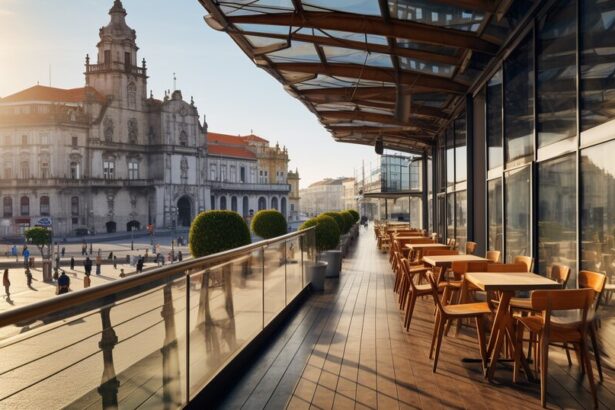
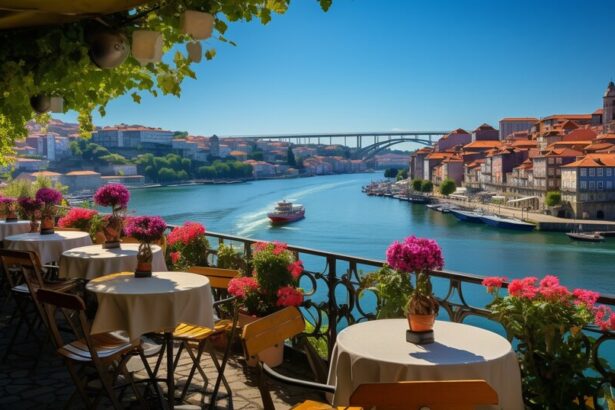
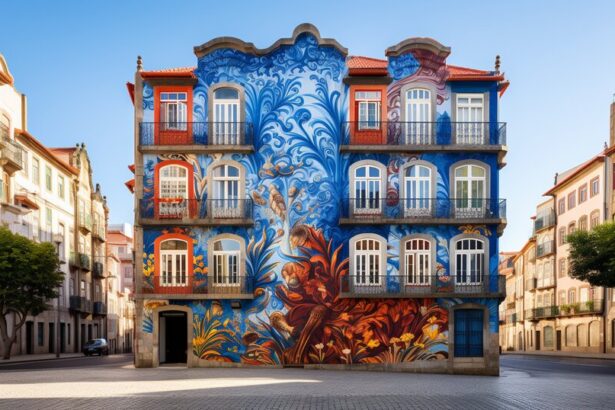
Porto’s architecture makes most sense when you stop treating it as one style. In a single day you can go from granite and carved church interiors to a 20th-century civic avenue, then take the metro to a white concrete concert hall. I would split the old centre and the coastal works into separate walks.
The old-centre walk
Start at São Bento station. Look up at the tiled hall, then walk to Avenida dos Aliados and notice how deliberately formal it feels beside the tighter streets behind it. Continue toward Clérigos and the Sé. This is where I look for the small things: carved stone around a doorway, iron balconies, tiled shop fronts and the way the street suddenly opens onto a view. Map the central walk.
For modern Porto: Casa da Música
Casa da Música by Rem Koolhaas and OMA is at Boavista. Go inside if you can: the building is more interesting as a sequence of rooms than as the white object people photograph from the roundabout. Check the official visitor and concert information for guided visits and what is open that day.
Give Serralves half a day
Álvaro Siza’s Serralves Museum is not a quick add-on to the centre. The museum, park and villa make a full outing, and I would check the current visitor information before buying a ticket. The point is to move between the galleries and the grounds, not race through the building and leave.
Siza by the sea
For Siza’s coastal work, set aside another half-day for Piscina das Marés and Casa de Chá da Boa Nova in Leça da Palmeira. They are outside the centre and make a good pairing with a walk along the coast. The pool has seasonal access, so check before travelling; Visit Porto’s Siza architecture map helps plan other works nearby.
My advice is to choose one modern stop, not all of them in a single day. Old Porto is steep and full of places that slow you down; Serralves and Leça each deserve their own time. Wear shoes for stone pavements, and look above the shop signs. The city’s best details are often the ones nobody queued to photograph.